Identification guide
Meet the eight groups
You don't need to name the species. Just decide which of these eight groups each visitor belongs to.
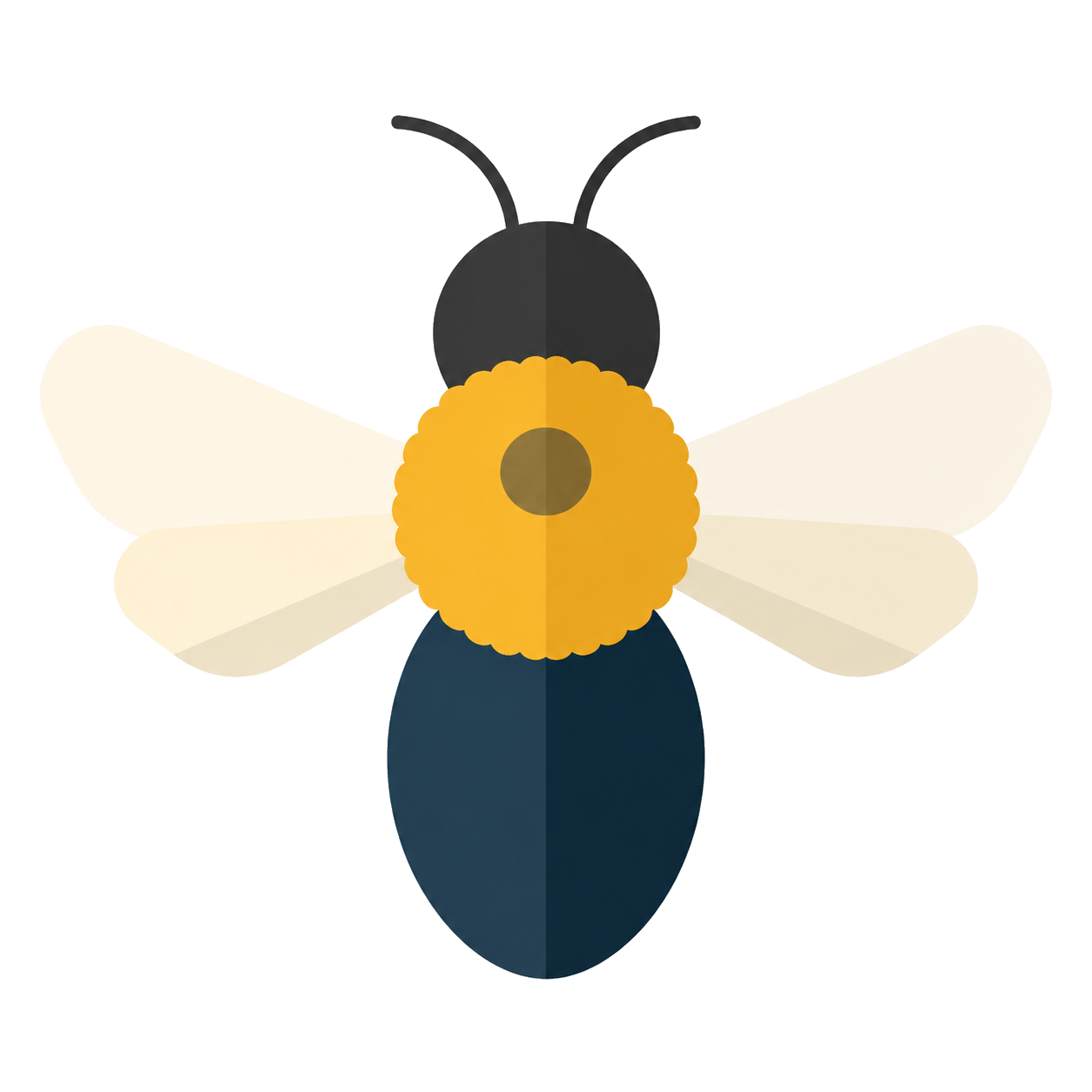
Carpenter bees
Large bees that look like bumble bees but for one giveaway: a shiny, hairless black abdomen. Often seen hovering near wood structures.
View this group →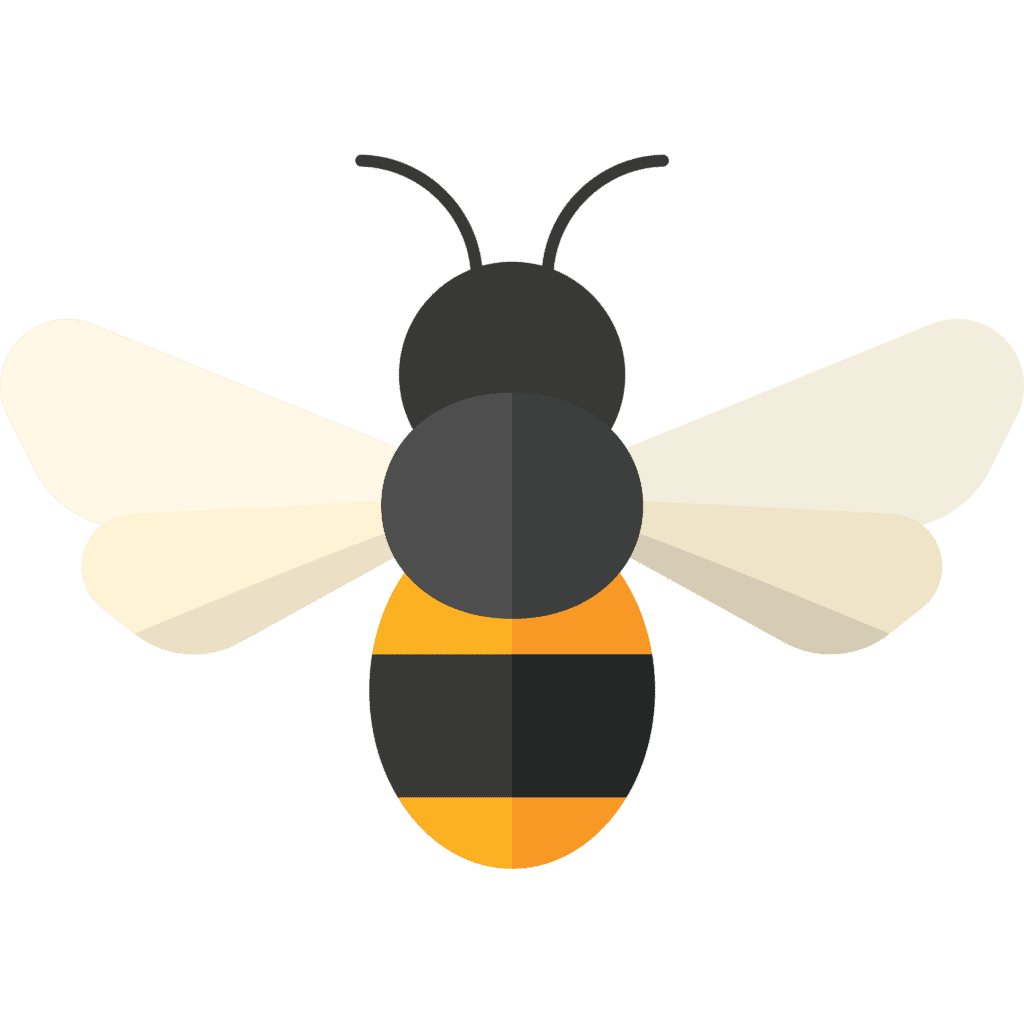
Bumble bees
Large, round, very fuzzy bees with black-and-yellow bands and an audible buzz. Slower, deliberate fliers.
View this group →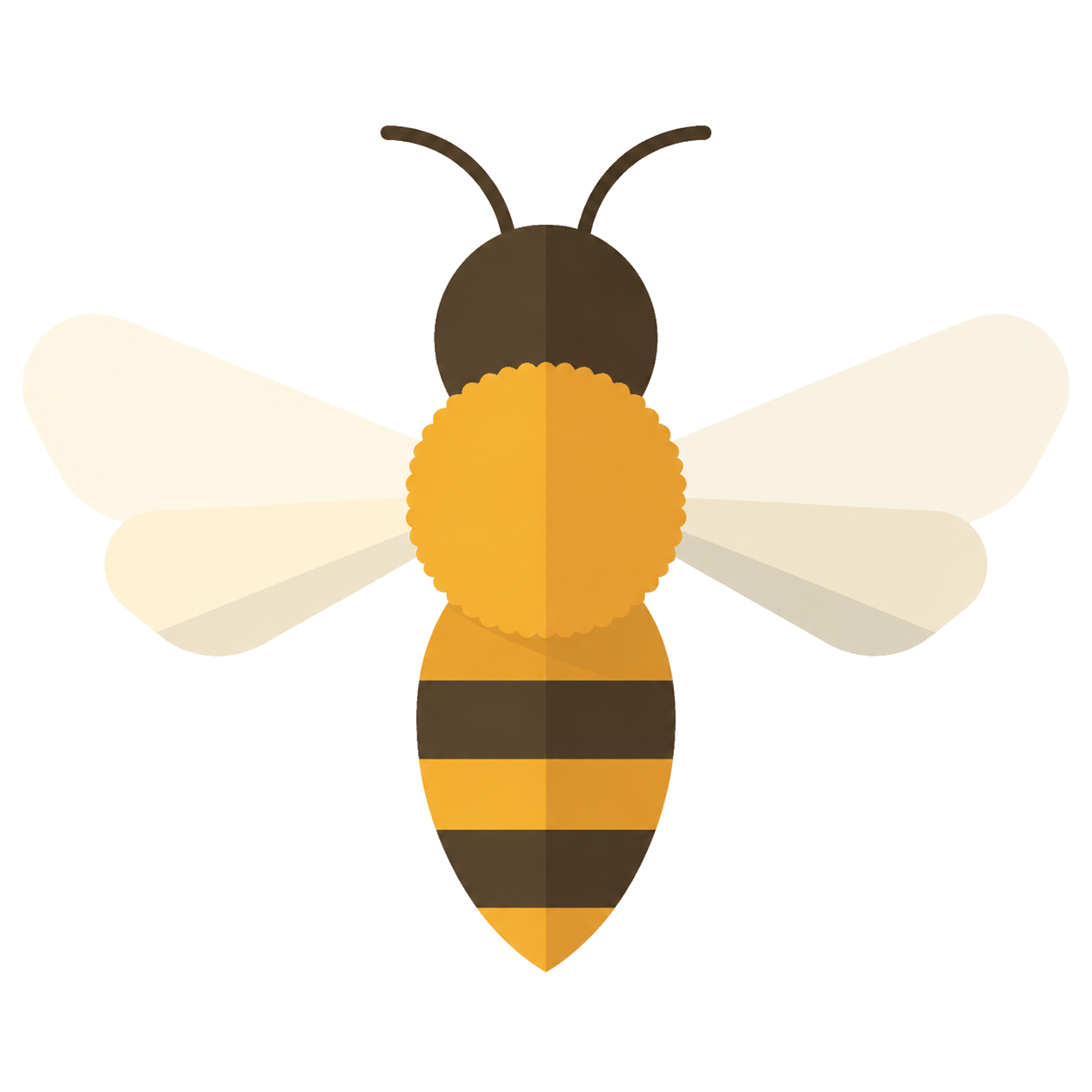
Honey bees
Slender, amber-brown bees with a lightly fuzzy thorax. Watch for full pollen baskets on the hind legs.
View this group →
Small bees
Bees under about a centimeter — including sweat bees, some a brilliant metallic green. Quick and easy to overlook.
View this group →
Wasps
Smooth, slender insects with a narrow waist and little hair. Legs often dangle in flight.
View this group →
Flies
Two wings instead of four, short antennae, and large eyes. Many mimic bees — the single pair of wings and hovering give them away.
View this group →
Butterflies/Moths
Scaled wings and a coiled feeding tube. Butterflies hold wings up at rest; moths rest with wings flat.
View this group →
Other insects
Anything visiting that is not one of the seven groups above — beetles, ants, true bugs, dragonflies and more. If it lands on your plant, it counts.
View this group →